Vittorio Bresciano
TREK11
2024
Academic Project
Group
Collaboration with
HP
Design premise
The brief required enhancing additive manufacturing, identifying mountain trekking as a field in which 3D printing can offer real added value.
Traditional snowshoes, in fact, are standardized in a few sizes based on approximate parameters, often proving unsuitable for specific needs and limiting user customization.
3D PRINTING
SPECIFIC NEEDS
MOUNTAIN
TREKKING

Design question
How might we leverage 3D printing to design customized snowshoes that adapt to the specific needs of each user and improve the trekking experience compared to standardized solutions?
The solution

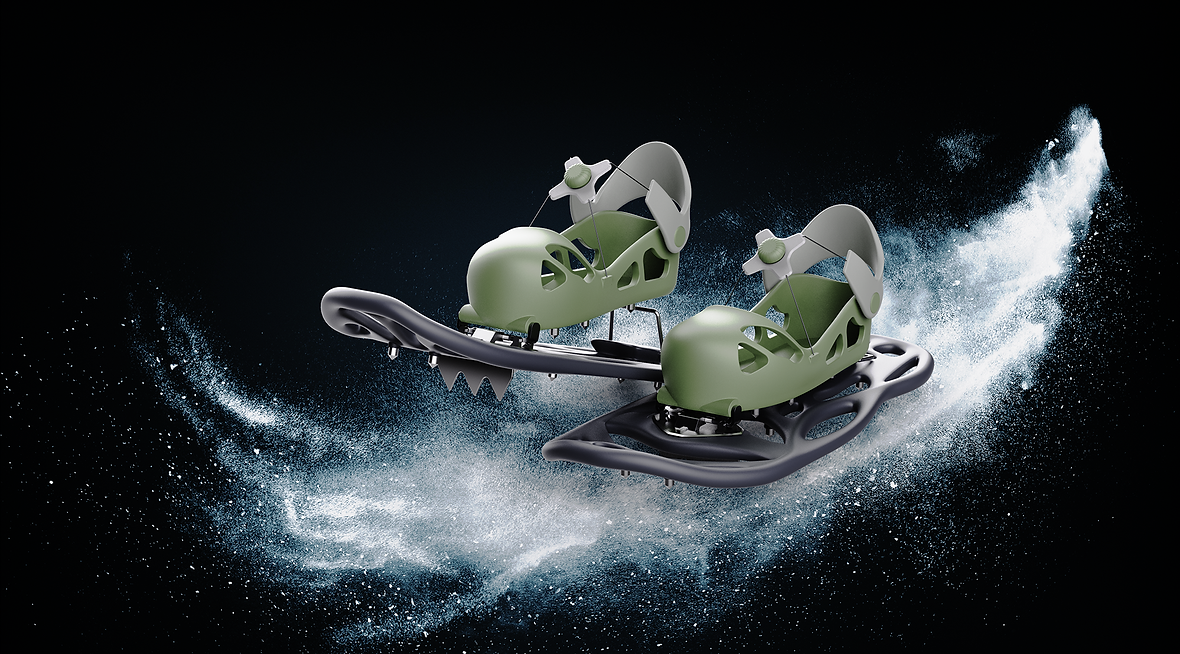
The product is an advanced snowshoe entirely 3D-printed, characterized by a high level of customization that allows it to precisely adapt to each user.
It consists of two main elements, easily attachable: the snowshoe and a shell to be applied over the boot, making it suitable for trekking on snow and technical ice.
SHELL
SNOWSHOE

The two main elements

SHELL
It transforms a standard boot into a technical footwear solution suitable for snow trekking. In specific situations, such as narrow terrain or areas with little snow, it can also be used without the snowshoe, still ensuring grip and safety.

SNOWSHOE
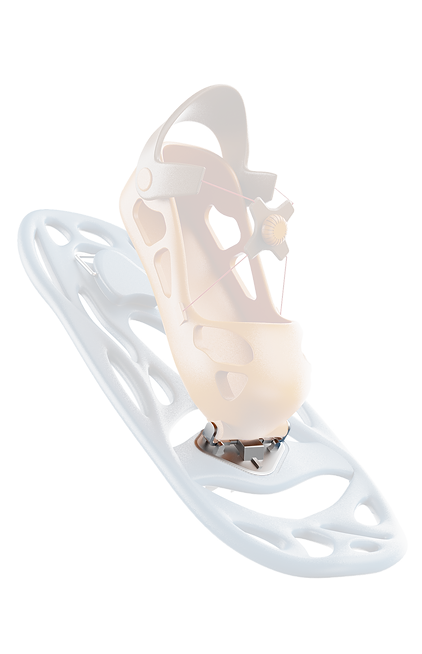
Compared to traditional versions, it introduces two main improvements: a quick attachment/detachment system with the shell and a high level of customization, precisely tailored to the user’s physical characteristics.
How it work

CUSTOMIZE
Through a dedicated platform, the user scans their boots and enters their physical information. Based on this data, both the snowshoes and the shell are custom-made using 3D printing.

HIKE
Once the snowshoes are obtained, the user can tackle hikes with high performance in different contexts, thanks to the two distinct elements, without the need for additional technical equipment.
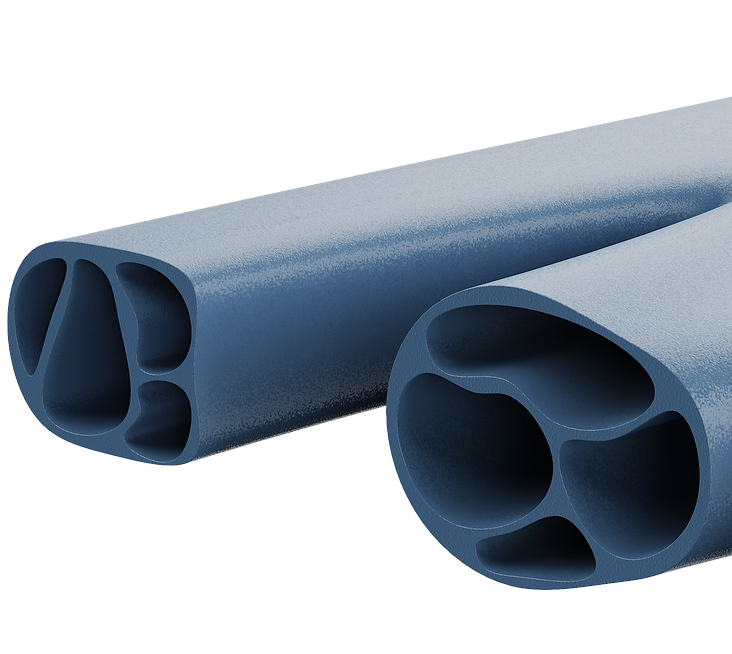
The internal structure
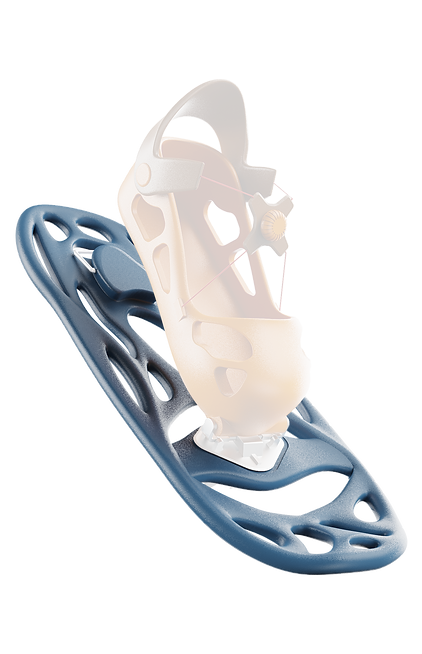
Attachment–detachment system

Heel lift

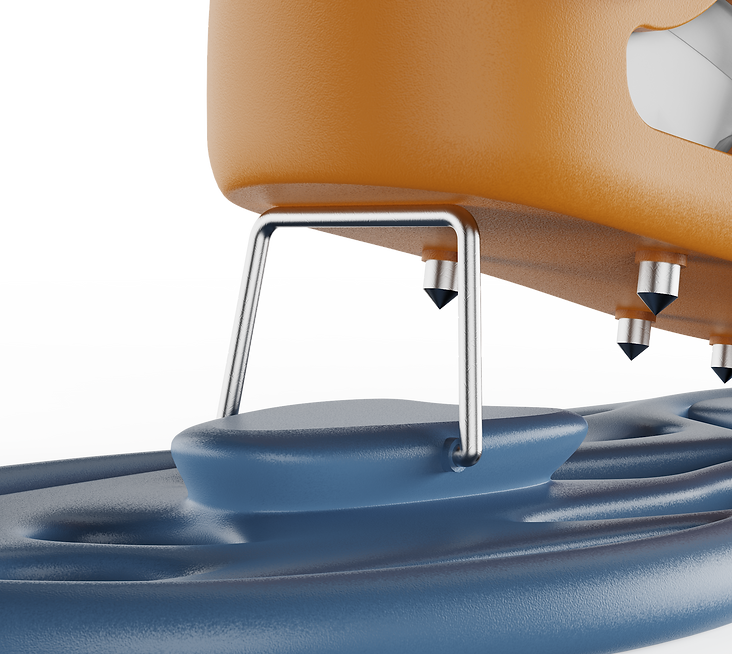
Crampons and spikes

